Garage Opener Not Working After Power Outage? What to Check Before You Call for Repair
If your garage opener stopped working after a power outage, the problem may be simple: a tripped breaker, disconnected emergency release, dead backup battery, lost remote programming, sensor issue, or opener motor reset. But some problems are not safe to force, especially if the door feels heavy, crooked, jammed, or stuck halfway.
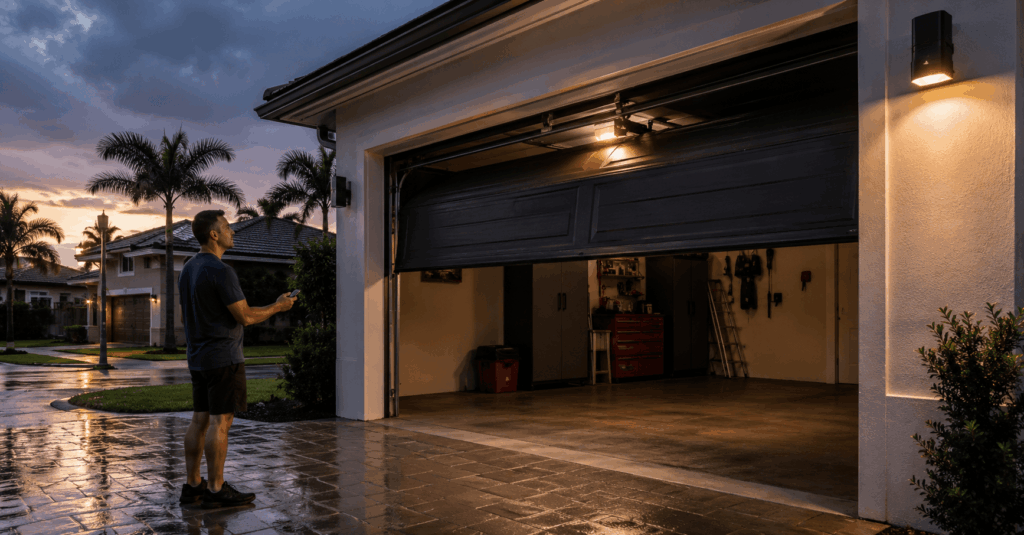
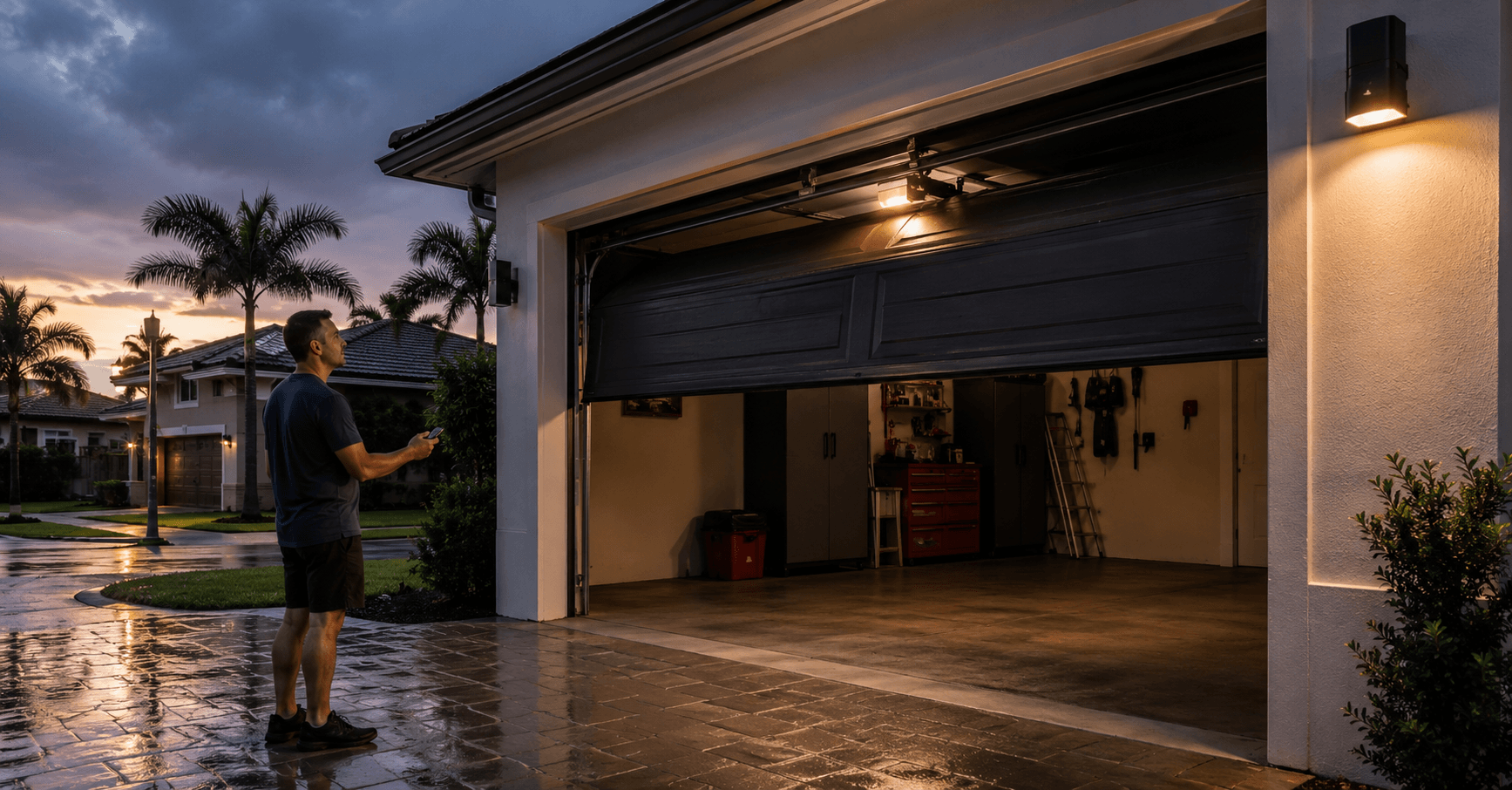
South Florida power outages can happen after storms, lightning, grid interruptions, or electrical surges. When power comes back, many homeowners press the garage door remote and expect everything to work like normal. Then nothing happens. The wall button may be dead. The motor may click but not move. The opener lights may flash. The garage door may close partway and reverse. Or the opener may run while the door stays disconnected.
This guide from Best Garage Door Company FL explains the most common reasons a garage opener is not working after a power outage, what you can safely check, when to stop troubleshooting, and when to schedule professional garage door opener repair.
Why Your Garage Door Opener Stops Working After a Power Outage
A garage door opener is an electrical motor connected to a mechanical door system. After a power outage, the opener may lose power, disconnect from the trolley, reset its logic board, lose remote/keypad programming, drain its backup battery, or trigger safety settings. In some cases, a surge can damage the circuit board or motor capacitor.
1. The opener has no power
The outlet, breaker, GFCI, surge protector, or power cord may be off after the outage. If the opener light does not turn on and the wall button is dead, start with power.
2. The emergency release is disconnected
If someone pulled the red emergency release cord during the outage, the opener may run but the door will not move until the trolley is reconnected.
3. The safety sensors are misaligned
If the door starts closing and reverses, or the opener light flashes, the photo-eye sensors near the floor may be blocked, dirty, loose, or knocked out of alignment.
4. The opener needs a reset
Some openers need a simple power-cycle reset after an outage. Others may require remote, keypad, travel limit, or force setting adjustments.
Quick Diagnosis: What Is Your Garage Opener Doing?
| What You Notice | Most Likely Cause | What to Do |
|---|---|---|
| Wall button and remote do nothing | No power to opener, tripped breaker, GFCI outlet, damaged outlet, bad opener board | Check breaker, outlet, plug, and opener light. If power is present but opener is dead, schedule service. |
| Opener motor runs, but door does not move | Emergency release is disconnected from trolley | Reconnect the trolley only when the door is fully closed and balanced. |
| Door starts closing, then reverses | Safety sensor obstruction, misalignment, travel-limit issue, or door resistance | Clean and align sensors. If it still reverses, do not force it closed. |
| Remote stopped working, wall button works | Remote battery, lost programming, receiver issue | Replace remote battery and reprogram. If several remotes fail, the opener receiver may need repair. |
| Keypad stopped working | Dead keypad battery, lost code, moisture, programming reset | Replace battery and reprogram keypad. South Florida humidity can damage older keypads. |
| Door feels extremely heavy manually | Broken spring or cable issue | Stop. Do not use the opener. Call a garage door technician. |
| Opener hums but does not lift | Motor strain, capacitor issue, gear/sprocket failure, heavy door | Disconnecting and forcing operation can damage the opener. Schedule repair. |
How to Reset a Garage Door Opener After a Power Outage
Before resetting the opener, make sure the door is in a safe position. The safest reset is done when the garage door is fully closed. If the door is stuck halfway, crooked, off track, or difficult to move, stop and call for service.
Step 1: Confirm the opener has power
Check whether the opener light turns on. Make sure the unit is plugged in. Then check the breaker panel and any GFCI outlet in the garage. A power surge can trip a breaker or outlet even after the rest of the house has power.
Step 2: Unplug the opener for 30 to 60 seconds
If the opener has power but is not responding correctly, unplug it from the ceiling outlet, wait 30 to 60 seconds, then plug it back in. This can reset the opener’s internal logic board on many models.
Step 3: Check the emergency release cord
The red cord hanging from the opener rail disconnects the garage door from the opener so the door can be moved manually during an outage. If it was pulled, the opener may operate without moving the door.
To reconnect it, the garage door should usually be fully closed. Then pull the emergency release handle toward the opener or door, depending on your model, and run the opener until the trolley reconnects. If you are not sure, do not guess — incorrect reconnection can damage the opener carriage or door.
Step 4: Test the door manually
With the opener disconnected, carefully lift the garage door by hand. A properly balanced garage door should move smoothly and should not feel like dead weight. If it slams down, will not stay open, or feels extremely heavy, you may have a broken spring or cable problem.
Step 5: Inspect the safety sensors
Look near the bottom of each side of the garage door track. The safety sensors should face each other clearly. Wipe the lenses, remove boxes or tools blocking the beam, and check whether the sensor lights are solid. Blinking or missing lights often mean misalignment or wiring issues.
Step 6: Reprogram the remote or keypad if needed
If the wall button works but the remote or keypad does not, replace the remote/keypad battery first. If that does not work, use the opener’s Learn or Program button to re-sync the remote. If multiple remotes fail after an outage, the receiver or circuit board may need repair.
Step 7: Call a professional if the opener still fails
If the opener is still not working after power is restored, the issue may be a damaged logic board, motor capacitor, stripped gear, worn trolley, bad wall console, faulty wiring, or a door-balance problem. Best Garage Door Company FL provides garage door opener repair, troubleshooting, and replacement throughout South Florida.
When the Problem Is Not the Opener
This is where many homeowners make an expensive mistake. They assume the opener is broken because the door will not open after a power outage. But the opener may be responding correctly while the garage door itself has a mechanical failure.
Signs the garage door system needs repair
- The door feels too heavy to lift manually.
- The door opens a few inches and stops.
- The door is crooked or uneven.
- You hear a loud snap, bang, grind, or pop.
- The cables look loose, frayed, or hanging.
- The rollers are out of the track.
- The opener rail bends or shakes when trying to lift the door.
- The door reverses even when the sensors are clear.
If any of these are happening, the correct service may be garage door repair, spring replacement, cable repair, track repair, roller replacement, or opener adjustment — not just a reset.
South Florida Storms, Power Surges, and Garage Door Openers
In South Florida, garage door openers deal with heat, humidity, salt air, storms, lightning, and frequent electrical interruptions. After a power outage, older openers may fail because the circuit board was already weak, the motor was already strained, or the door was already out of balance.
A professional inspection can identify whether your opener only needs a reset or whether it is time to repair or replace the unit. If your opener is older, loud, slow, inconsistent, or missing modern safety features, replacement may be the smarter long-term move.
Should you repair or replace the opener?
Repair may make sense if the opener is newer, the motor is strong, and the issue is a remote, sensor, gear, trolley, wire, or setting. Replacement may be better if the opener is very old, frequently failing, has no battery backup, struggles with the door, or has circuit-board damage from a surge.
Common Garage Opener Problems After a Power Outage
The opener light flashes but the door will not close
Flashing lights often point to sensor issues, wiring problems, or travel/force settings. Check for obstructions first. If the sensors are aligned and the door still reverses, the opener may be detecting resistance from the door.
The garage door remote stopped working
Power interruptions can sometimes affect remote programming or expose weak remote batteries. Replace the battery and reprogram the remote. If the wall button works but none of the remotes work, the opener receiver may be the issue.
The garage keypad stopped working
Keypads are exposed to heat, sun, rain, and humidity. After an outage, a weak battery or moisture-damaged keypad may stop responding. Try a new battery and reprogramming. If the keypad still fails, replacement may be needed.
The opener clicks but does not move
Clicking can mean the unit is receiving a signal but cannot operate the motor. This may be caused by a bad capacitor, logic board issue, gear failure, or door resistance.
The opener hums but the door will not open
A humming opener may be under strain. Do not keep pressing the button. If the door is heavy or the motor is struggling, continued use can damage the opener.
Safety First: What You Should Not Do
Garage doors are heavy moving systems. The opener, springs, cables, rollers, hinges, tracks, and sensors all work together. After a power outage, avoid these common mistakes:
- Do not force the garage door open with the opener.
- Do not keep pressing the remote if the motor is humming or straining.
- Do not pull the emergency release while the door is open unless you know the door is balanced.
- Do not loosen springs, cables, drums, or bottom brackets.
- Do not bypass safety sensors to make the door close.
- Do not stand under a stuck or partially open garage door.
The U.S. Consumer Product Safety Commission requires automatic residential garage door operators to comply with safety standards for entrapment protection. For homeowners, that means safety sensors and reversing systems should never be ignored, bypassed, or treated as an inconvenience.
Need Garage Door Opener Repair in South Florida?
Best Garage Door Company FL helps homeowners with garage door opener problems, power-outage resets, remote programming, keypad issues, safety sensor troubleshooting, noisy openers, broken springs, cables, rollers, tracks, off-track doors, and full garage door installation.
Start with our home page, view recent work in our garage door gallery, or book an appointment for fast help.
Garage Door Service Areas We Support
We provide garage door opener repair and garage door service across South Florida, including Palm Beach County, Broward County, and surrounding areas.
Garage Opener Not Working After Power Outage: FAQs
Why is my garage opener not working after a power outage?
The most common reasons are no power to the opener, a tripped breaker or GFCI outlet, a disconnected emergency release, drained backup battery, misaligned safety sensors, lost remote programming, or surge damage to the opener’s logic board.
How do I reset my garage door opener after a power outage?
First confirm the opener has power. Then unplug it for 30 to 60 seconds and plug it back in. Make sure the emergency release trolley is connected and the safety sensors are clear. If the opener still fails, the unit may need professional repair.
Why does my garage door opener run but the door does not move?
The emergency release may be disconnected. This often happens when someone pulls the red cord during an outage. The trolley must be reconnected before the opener can move the door again.
Can a power outage damage a garage door opener?
Yes. The outage itself may not damage the opener, but a surge when power returns can damage the circuit board, transformer, receiver, wall console, or motor components.
Why does my garage door close halfway and then open again?
This is often caused by blocked or misaligned safety sensors, incorrect travel limits, or resistance in the door system. If sensor cleaning and alignment do not fix it, schedule service.
Should I manually open my garage door during a power outage?
You can use the emergency release if the door is fully closed and balanced. If the door is heavy, crooked, stuck, or partially open, do not force it. Call a garage door professional.
Why is my garage door so heavy after the opener is disconnected?
A heavy garage door usually means the spring system is not doing its job. You may have a broken torsion spring, extension spring, or cable issue. Do not reconnect the opener until the door is repaired.
Who should I call for garage door opener repair in South Florida?
Call Best Garage Door Company FL at 954-408-1560 or book service online for garage door opener repair, opener replacement, sensor troubleshooting, remote programming, and full garage door repair.
Final Answer: Do Not Assume the Opener Is Broken
If your garage opener is not working after a power outage, start with the basics: power source, breaker, GFCI, opener reset, emergency release, sensors, remote batteries, and keypad programming. But if the door is heavy, uneven, noisy, stuck, or unsafe, the real issue may be the garage door system — not the opener.
Best Garage Door Company FL provides fast, professional garage door repair, opener troubleshooting, and garage door service across South Florida. For help today, call 954-408-1560 or book your appointment online.